Fast Charging or Wireless Charging: One Is Quietly Killing Your Battery and the Other Might Surprise You
Everybody has a charging preference. Some people swear by tossing their phone on a wireless pad at night — effortless, no fumbling with cables. Others live by the "15 minutes on the fast charger before I leave the house" routine, treating it like a pit stop. Both habits feel completely normal. But when you zoom out and look at what each method actually does to your battery chemistry over a year or two of daily use, the picture gets a lot more complicated.
So which one is actually better for your battery's long-term health? Let's get into it.
First, a Quick Refresher on How Lithium Batteries Age
All modern smartphones use lithium-ion or lithium-polymer batteries. These cells degrade over time through a process called capacity fade — essentially, the battery holds less and less charge with every charge cycle. But not all cycles are equal. Two factors accelerate degradation faster than almost anything else: heat and high charge rates.
Heat causes the electrolyte inside the battery to break down and promotes unwanted chemical reactions at the electrode surfaces. High charge rates — the kind involved in fast charging — push lithium ions through the battery at a pace that causes physical stress to the electrode material. Both of these things happen gradually, but they compound over hundreds of cycles.
Keep that in mind as we break down each charging method.
The Case for Fast Charging
Fast charging technology — whether it's Qualcomm Quick Charge, Apple's 20W adapter, Samsung's 45W Super Fast Charging, or any of the other branded variants — works by delivering significantly more power to your battery than a standard 5W charger would. The result is a dramatically shorter charge time. A phone that takes two hours to charge slowly might be at 80% in 30 minutes with fast charging.
For a lot of American users, especially those commuting through cities or bouncing between meetings, that speed is genuinely useful. It's not just a gimmick.
The downside: Fast charging generates heat. A lot of it. Your phone getting warm during a fast charge isn't a coincidence — it's physics. The higher the charge rate, the more thermal energy is produced as a byproduct. And as we just covered, heat is one of the primary drivers of battery degradation.
Manufacturers have gotten smarter about managing this. Most modern fast charging systems use adaptive charging curves — they blast power at the beginning of the charge cycle and then taper down as the battery approaches full. This helps, but it doesn't eliminate the thermal stress entirely.
Studies from battery research institutions have shown that consistently charging at high wattage can reduce battery capacity by a measurable percentage over 500 charge cycles compared to slower charging. The gap varies by device and charger quality, but it's real.
The Case for Wireless Charging
Wireless charging — Qi standard on most Android phones, MagSafe on iPhones — works through electromagnetic induction. Your phone sits on a pad, and energy transfers through coils without any physical connection. It's elegant, convenient, and increasingly built into furniture, cars, and nightstands across the country.
Here's the thing most people don't know: wireless charging is actually less efficient than wired charging from an energy transfer standpoint. Somewhere between 20% and 30% of the power coming from the wall gets lost as heat during the induction process. That means wireless charging generates heat too — and in some cases, it generates more sustained heat than a fast wired charge, because the process takes longer.
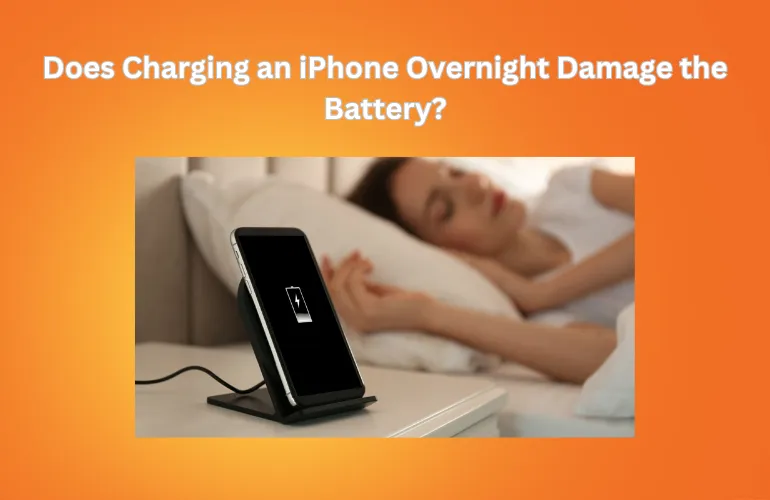
Leave your phone on a wireless pad all night, and you're exposing your battery to hours of low-level heat while it sits at or near 100% charge. Both the heat and the prolonged high state of charge are things your battery would rather avoid.
Standard Qi wireless charging tops out at around 7.5W to 15W on most devices — slower than fast charging, which means lower peak heat spikes. But the duration matters too.
So Which One Actually Wins?
Here's where it gets nuanced — and where a lot of the online debate misses the point.
Neither method is inherently safe or inherently destructive on its own. What actually matters is how you use each one.
Wireless charging at night, left unchecked, can be rough on your battery because of the combination of heat and prolonged exposure to a full charge state. If your phone hits 100% at midnight and sits on that pad until 7 a.m., you've spent seven hours cooking your battery at maximum capacity. That's not great.
Fast charging used occasionally and smartly — say, a quick top-up in the morning rather than an overnight routine — is less damaging than its reputation suggests. The key is not making it your default method for every single charge.
For pure long-term battery longevity, the research and manufacturer guidance consistently point toward the same conclusion: slow, moderate charging to around 80%, without prolonged exposure to heat or full charge, is the gentlest method available. A standard 5W or 10W wired charger, used with a timer or a smart outlet that cuts power at 80%, beats both fast charging and wireless charging for battery health over time.
The Accessories That Actually Make a Difference
Your charger choice matters, but so does the gear around it.
MagSafe-compatible smart charging stands for iPhone users now offer battery optimization modes that stop charging at 80% and resume only when needed. Paired with Apple's own optimized charging feature in iOS, this setup meaningfully reduces overnight wear.
Wireless charging pads with cooling fans have become more common and are worth considering if you rely on wireless overnight. The thermal management alone can extend the effective lifespan of your battery over a year or more of regular use.
High-quality fast charging cables and adapters matter more than people realize. Cheap third-party cables can deliver inconsistent power, cause voltage spikes, and generate excess heat. If you're going to fast charge, invest in a certified cable from a reputable brand — it's a small cost for real protection.
Smart power strips and USB charging hubs with programmable timers let you set a cutoff time so your phone isn't sitting at 100% charge for half the night regardless of which charging method you prefer.
The Verdict
Fast charging isn't the villain it's sometimes made out to be, and wireless charging isn't the gentle hero it feels like. Both have trade-offs. The real damage comes from habits — overnight wireless charging at full capacity, or relying on fast charging for every single top-up, every single day.
If you want to protect your battery for the long haul, the winning setup is a combination: use fast charging strategically when you need speed, lean on slower wireless or wired charging for your regular routine, and invest in accessories that manage heat and charge limits automatically. Your battery will thank you — probably somewhere around year three, when everyone else's phone is struggling to make it through a workday and yours is still holding strong.