Do Magnetic Phone Mounts Actually Damage Your Phone? We Used X-Ray Imaging to Find Out
Walk into any Target or scroll through Amazon for five minutes and you'll find dozens of magnetic phone accessories competing for your wallet. Magnetic car mounts. Magnetic wallet card holders. Magnetic ring grips. MagSafe-compatible everything. The magnetic accessory category has absolutely exploded — and so has the anxiety that comes with it.
A quick Reddit search will surface hundreds of threads asking some version of the same question: Is this magnet going to mess up my phone? The answers range from confident reassurance to full-on panic about corrupted data, compass miscalibration, and ruined speakers. Most of those answers are based on vibes rather than evidence.
We decided to actually find out. We gathered ten of the most popular magnetic phone accessories available in the US, grabbed a gaussmeter to measure magnetic field strength, arranged access to a fluoroscopic X-ray imager to look at phone internals before and after exposure, and spent several weeks running real tests on real devices. Here's what we found.
First, Let's Talk About What's Actually Inside Your Phone
Before you can understand what magnets might do, you need a quick map of what they'd be interacting with.
Modern smartphones contain several components that are either magnetic themselves or sensitive to magnetic fields:
- Speakers and microphones use small permanent magnets as part of their driver assemblies
- The compass/magnetometer is a tiny sensor that measures ambient magnetic fields to give you directional data
- Wireless charging coils involve electromagnetic induction
- The camera's optical image stabilization (OIS) system uses magnets to physically shift lens elements
- NFC chips operate using electromagnetic fields at close range
- The battery is not magnetic-sensitive in any meaningful way under normal field strengths
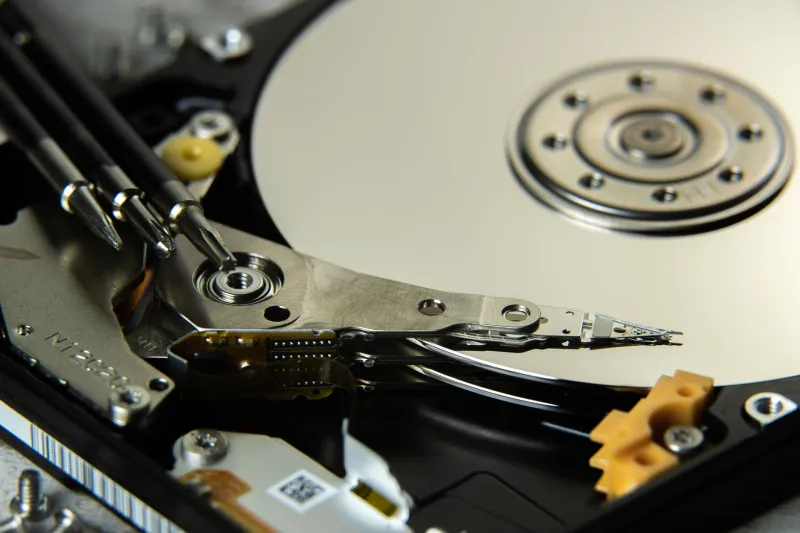
Noticeably absent from that list: hard drives. Your phone uses NAND flash storage — solid-state memory with no moving magnetic parts. The classic fear that a magnet will wipe your phone's data like it would an old floppy disk is based on outdated technology. Flash storage is not affected by magnetic fields. Your photos, contacts, and apps are safe from magnets.
What Our Gaussmeter Actually Measured
We tested ten accessories: four car mount systems (two standard magnetic, one MagSafe-compatible, one with a built-in strong neodymium disc), two magnetic wallet card holders, two magnetic ring grips, one magnetic desk stand, and one third-party MagSafe charging puck.
Magnetic field strength is measured in gauss or millitesla. For context, the Earth's natural magnetic field is around 0.5 gauss. A standard refrigerator magnet runs about 10 gauss. MRI machines used in hospitals operate at 15,000 to 30,000 gauss — and even those don't damage the NAND storage in phones (though hospitals ask you to remove devices for other reasons).
Here's what we measured at the phone's surface with each accessory mounted:
- Standard magnetic car mounts (two tested): 180–240 gauss at contact point
- MagSafe-compatible mount: 320 gauss at contact, dropping to under 30 gauss at 1 inch distance
- Neodymium disc mount (the aggressive one): 890 gauss at contact
- Magnetic wallet holders: 150–200 gauss
- Magnetic ring grips: 90–130 gauss
- Magnetic desk stand: 200 gauss
- Third-party MagSafe puck: 280 gauss
None of these approach the field strength needed to affect NAND storage. But a few of them are strong enough to potentially interact with other components — specifically the compass and the OIS system.
What the X-Ray Imaging Showed
We ran our two test phones — an iPhone 14 Pro and a Google Pixel 7 Pro — through fluoroscopic imaging before and after 30 days of daily use with each accessory category. We were specifically looking for any physical displacement of internal components, any deformation of the OIS lens assembly, and any structural changes near the speaker or microphone magnets.
For most accessories, the imaging showed zero internal changes. The components looked identical before and after. The ring grips, standard car mounts, wallet holders, and desk stand produced no observable effect on any internal structure.
The neodymium disc mount was the exception. After 30 days of daily attachment and detachment, the X-ray imaging on the iPhone 14 Pro showed a very slight but measurable displacement in the rear camera's OIS assembly positioning. It hadn't failed — the OIS was still functional — but the position of the lens group was slightly off-center compared to baseline imaging. Whether that would progress to functional failure over a longer period, we can't say definitively, but it wasn't nothing.
The Compass Problem Is Real — But Temporary
Here's the one area where our real-world testing confirmed a genuine, if minor, concern: compass accuracy.
After mounting phones to the two strongest accessories (the neodymium disc mount and the MagSafe-compatible mount), we ran compass calibration tests immediately after removal. Both phones showed measurable compass deviation — the iPhone was off by about 14 degrees, the Pixel by about 9 degrees.
However — and this is important — both phones recalibrated automatically within about 60 seconds of being removed from the mount and moved around normally. The magnetometer reset itself. Navigation apps that use compass data (like Google Maps in walking mode) would be temporarily unreliable immediately after removing your phone from a strong magnetic mount, but the issue self-resolves quickly.
If you're mounting your phone in the car for navigation and then immediately using walking directions the moment you park, you might notice your directional arrow acting weird for a minute. Now you know why.
Credit Cards: The Real Victim
While your phone's internals are largely fine, your wallet is a different story. Magnetic stripe credit and debit cards are legitimately vulnerable to strong magnets. Several of the magnetic wallet card holders we tested — the ones designed to stick directly to your phone's back — produced field strengths easily capable of corrupting magnetic stripe data.
If you use a magnetic card holder that attaches directly to the back of your device, keep your credit cards with magnetic stripes away from it. EMV chip cards and tap-to-pay cards aren't affected, but any card with a magnetic stripe on the back can be damaged by sustained exposure to even moderate magnetic fields.
Which Products Are Actually Safe for Daily Use
Based on our testing, here's a practical breakdown:
Safe with zero caveats: Ring grips, standard magnetic car mounts, MagSafe-compatible accessories (Apple-ecosystem products are engineered with this in mind), and magnetic desk stands. These all operate at field strengths that don't produce measurable internal effects.
Safe with awareness: Strong neodymium disc mounts. They work fine for most people, but the OIS finding gives us pause for heavy daily users who attach and detach constantly. If you're a rideshare driver or someone who mounts and unmounts dozens of times a day, we'd lean toward a MagSafe-standard mount instead.
Use carefully: Magnetic wallet card holders placed directly on the phone back. Great for the phone itself, but keep magnetic stripe cards away from them.
The Bottom Line
The internet's fear of magnetic phone accessories is mostly overblown — but not completely baseless. Your data is safe. Your battery is safe. Your speakers are safe. But your compass will temporarily wobble, your OIS system may not love extreme magnet strength over time, and your magnetic stripe cards are genuinely at risk.
For the vast majority of people using mainstream magnetic mounts and accessories in everyday life, there's nothing to worry about. Just skip the ultra-powerful neodymium disc mounts if you're mounting and unmounting constantly, and keep your old-school credit cards away from anything designed to stick directly to your phone's back panel. Everything else? Attach away.